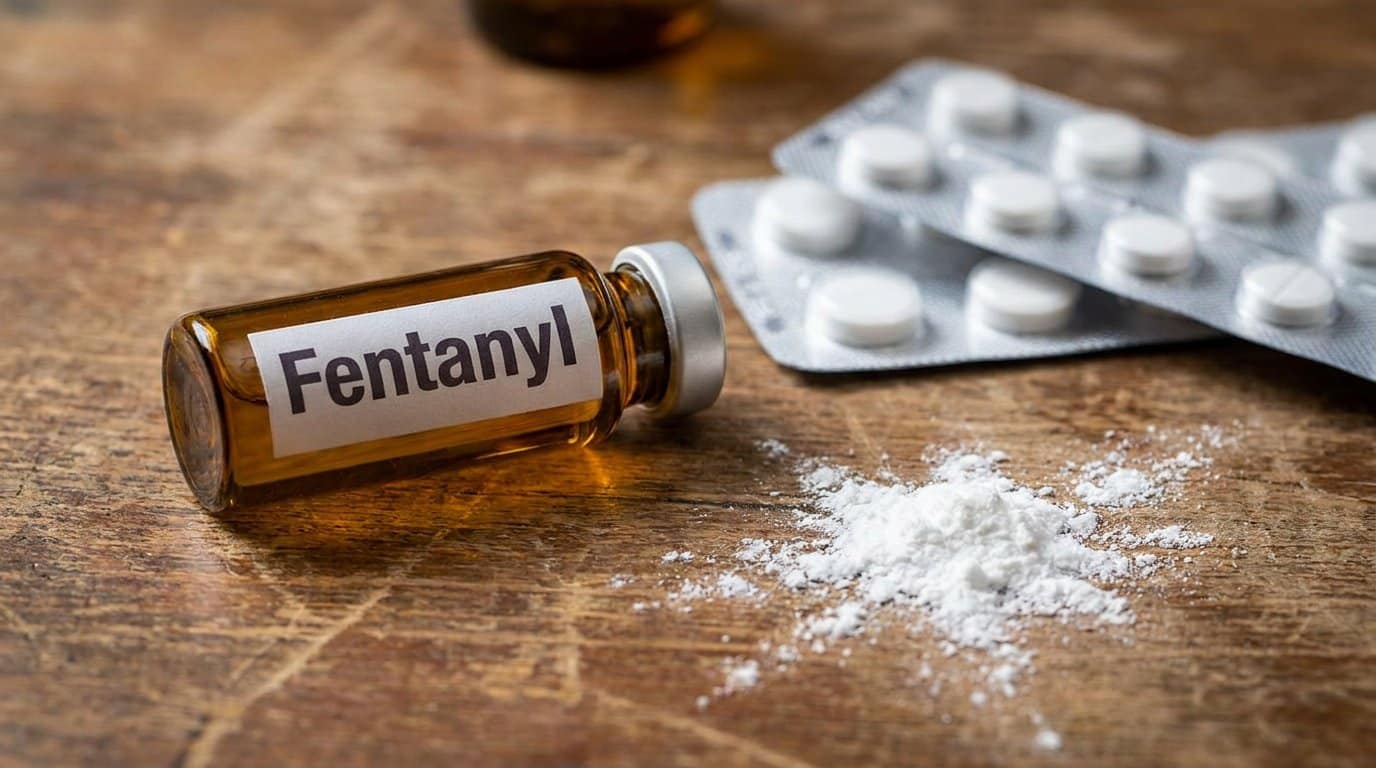
Fentanyl’s effects hit you within minutes, your breathing slows, your pupils constrict, and your chest muscles can lock rigid. It crosses your blood-brain barrier rapidly, suppressing your respiratory centers before you even realize you’re in danger. Over time, it hijacks your brain’s reward system, weakens your heart, disrupts your hormones, and increases your pain sensitivity. Tolerance builds fast, but it drops just as quickly during breaks, making relapse potentially fatal. Understanding each stage can help you recognize the risks ahead.
What Fentanyl Does to Your Body Within Minutes

When fentanyl enters your body, it triggers a cascade of physiological changes that can become life-threatening within minutes. Your breathing slows rapidly as the drug suppresses your brainstem’s respiratory centers. Chest wall muscle rigidity can develop, further compromising your ability to breathe normally. Within two minutes, respiratory arrest becomes a real possibility.
The fentanyl effects on body systems extend beyond respiration. Your pupils constrict to pinpoints, your heart rate drops, and your blood pressure falls. Nausea and vomiting may occur, raising your aspiration risk. You’ll experience profound sedation, losing coordination and environmental awareness quickly. Your skin may become clammy or discolored. These rapid, simultaneous changes across multiple organ systems demand immediate medical attention. Because inconsistent street drug purity makes each dose unpredictable, even experienced users face the risk of a fatal overdose with every use.
Why Fentanyl Shuts Down Your Breathing So Fast
Among all the rapid physiological changes fentanyl triggers, respiratory depression stands as the most dangerous, and it happens faster with fentanyl than with nearly any other opioid. Fentanyl’s high lipid solubility allows it to cross your blood-brain barrier within seconds, suppressing your breathing before your body’s protective reflexes can respond.
Unlike heroin, which primarily reduces tidal volume, fentanyl simultaneously decreases both your breathing rate and tidal volume. This dual suppression drives respiratory depression opioid experts classify as uniquely lethal. Your brain’s chemoreceptors normally detect rising carbon dioxide and trigger compensatory breathing, but fentanyl’s speed outpaces this response entirely.
The result is a critically narrow window between exposure and life-threatening oxygen depletion. Your body simply can’t activate its safeguards fast enough to counteract fentanyl’s overwhelming potency. Even after breathing frequency appears to normalize, studies show that elevated inspiratory duration and end inspiratory pause persist, revealing that fentanyl’s disruption of respiratory mechanics extends well beyond initial recovery.
How Fentanyl Can Freeze Your Chest and Strain Your Heart

Beyond its assault on your breathing centers, fentanyl can lock your chest muscles into a rigid, immovable state, a phenomenon clinicians call “wooden chest syndrome.” This rigidity develops through fentanyl’s activation of mu-opioid receptors in the locus coeruleus, which triggers a surge of noradrenergic signaling to your respiratory muscles. Symptoms can appear within minutes of fentanyl administration, typically lasting an average of 10-12 minutes before resolution.
This stiffening increases your oxygen consumption while simultaneously restricting ventilation, causing faster desaturation than apnea alone. Any fentanyl side effects list must include bradycardia, arrhythmias, and hypotension, cardiac consequences of receptor binding throughout your cardiovascular system. Over time, chronic exposure weakens your heart muscle, promotes coronary artery plaque buildup, and raises your infarction risk.
When cardiac arrest coincides with wooden chest syndrome, CPR becomes nearly impossible. Emergency survival rates drop considerably compared to other opioid overdoses, making rapid naloxone administration critical.
How Fentanyl Rewires Your Brain’s Reward System
Because fentanyl binds to mu-opioid receptors with exceptional affinity, it hijacks the brain’s mesolimbic reward system, the same circuitry that reinforces survival behaviors like eating and social bonding. Once activated, these receptors suppress inhibitory GABA neurons, removing natural brakes on dopamine release. The resulting dopamine surge is hundreds of times more powerful than natural reward signals.
Understanding how fentanyl affects the brain reveals why dependence develops rapidly. Repeated exposure physically restructures your reward circuits, progressively reducing your natural dopamine production capacity. Your brain adapts by decreasing receptor sensitivity, demanding escalating doses for equivalent effects.
Over time, you lose the ability to experience pleasure without the drug. Decision-making, concentration, and emotional regulation deteriorate as neural pathways governing pain perception and reward become fundamentally altered from baseline functioning.
What Fentanyl Does to Your Body Over Months and Years

While fentanyl’s grip on your brain’s reward system develops within weeks, the drug’s assault on your body unfolds across months and years, silently degrading organ systems you depend on to survive.
Understanding what does fentanyl do to you long-term reveals damage across five critical systems. Your respiratory function deteriorates, increasing pneumonia risk and causing permanent lung damage. Chronic constipation escalates into bowel obstruction or perforation. Your immune system weakens, reducing vaccine effectiveness and slowing wound healing. Long-term effects of fentanyl can also lead to severe mental health issues, including anxiety and depression.
Fentanyl disrupts your endocrine system, triggering irregular menstrual cycles, bone density loss, and metabolic dysfunction. Meanwhile, treatment-resistant depression, chronic anxiety, and persistent cognitive impairment compromise your mental health.
These consequences don’t resolve overnight. Hormonal disruptions persist for months after discontinuation, and immune compromise extends your vulnerability long after you’ve stopped using.
Why Fentanyl Makes You Need More and Hurt Worse
When you use fentanyl repeatedly, your opioid receptors become less responsive, forcing your body to demand higher doses just to achieve the same level of pain relief. At the same time, chronic use can trigger opioid-induced hyperalgesia, a condition where your nervous system paradoxically becomes *more* sensitive to pain between doses. This combination of escalating tolerance and worsening pain creates a cycle of physical dependence that traps your body in a state where it can’t function normally without the drug.
Tolerance Demands Higher Doses
Fentanyl’s grip on the body tightens with every dose, as chronic exposure triggers neuroadaptation, a process where your central nervous system reduces its responsiveness to the drug. This means tolerance demands higher doses to achieve the same pain relief or sedation you initially experienced.
| Factor | Clinical Impact |
|---|---|
| Initial dose range | 1, 3 mg daily |
| Escalated dose range | Up to 50 mg over years |
| Rapid tolerance onset | 4+ days of continuous infusion |
| Documented escalation | 5-fold increase over 8 days |
You’re especially vulnerable if you’re opioid-naïve, since tolerant individuals survive fentanyl amounts that would be lethal for you. Even cross-tolerance from other opioids doesn’t fully protect you, because fentanyl’s potency, 50 to 100 times stronger than morphine, overwhelms those adaptations.
Hyperalgesia Worsens Pain
Beyond tolerance pushing you toward higher doses, a separate and more insidious process can take hold: opioid-induced hyperalgesia (OIH). With OIH, fentanyl doesn’t just lose effectiveness, it actively amplifies your pain. Your mu-opioid receptor binding triggers NMDA receptor activation, which upregulates calcium channels and nitric oxide cascades. Protein kinase C then phosphorylates your opioid receptors, reducing their analgesic capacity while simultaneously sensitizing your central nervous system.
- Your glutamate reuptake mechanisms become downregulated, perpetuating central sensitization and spreading pain beyond the original injury site
- Spinal dynorphin levels rise, activating descending facilitation pathways from the rostral ventromedial medulla that amplify nociceptive signaling
- Mechanical allodynia and thermal hyperalgesia develop, meaning previously painless stimuli now trigger genuine pain responses
Opioid-induced hyperalgesia creates a destructive cycle where treatment worsens the condition it’s meant to resolve.
Dependence Traps The Body
As your body adapts to fentanyl’s constant presence at mu-opioid receptors, a physiological trap closes around you, one where the drug simultaneously becomes less effective and more necessary. Within weeks of regular use, your brain restructures its dopamine production, becoming reliant on fentanyl to generate baseline pleasure responses. This neural adaptation means you can’t function normally without the drug.
When dependence traps the body, abrupt discontinuation triggers severe physical dependence and withdrawal symptoms, whole-body pain, chills, cramping, diarrhea, vomiting, and relentless insomnia. Your pupils dilate, anxiety surges, and intense cravings drive continued use despite mounting harm. While withdrawal isn’t typically life-threatening, the distress compels you back toward escalating doses, deepening the cycle of tolerance, dependence, and overdose vulnerability.
How to Recognize and Respond to an Overdose
Recognizing a fentanyl overdose quickly can mean the difference between life and death, since respiratory failure can occur within minutes of exposure. You should watch for key warning signs, pinpoint pupils, blue or pale skin, gurgling sounds, limp body, and slow or absent breathing, that signal the brain’s respiratory centers are shutting down. If you suspect an overdose, your immediate actions, including calling 911 and administering naloxone, are critical to reversing fentanyl’s effects before irreversible harm occurs.
Spotting Overdose Warning Signs
How quickly can a fentanyl overdose turn fatal? Peak respiratory depression can occur within five minutes, making your ability to recognize the signs of fentanyl overdose critical. Because fentanyl is up to 100 times more potent than morphine, just two milligrams can prove lethal.
Watch for the opioid overdose triad, these three indicators together confirm overdose more reliably than any single symptom:
- Pinpoint pupils paired with unconsciousness or extreme unresponsiveness to stimulation
- Severely slowed, shallow, or absent breathing, often accompanied by choking or gurgling sounds
- Skin discoloration, pale, blue, or grayish tone, particularly visible on lips and fingernails, signaling oxygen deprivation
You may also observe a limp or unusually rigid body, slow pulse, and vomiting. These signs demand immediate emergency intervention.
Emergency Response Action Steps
Because peak respiratory depression from fentanyl can occur within five minutes, every second you spend acting, rather than hesitating, directly improves the victim’s chance of survival. Your emergency response action steps should follow this sequence: call 911 immediately, then perform naloxone administration using proper technique. Most states protect you from legal liability when calling for overdose assistance.
While awaiting paramedics, provide rescue breathing by pinching the nose shut and delivering breaths if the victim isn’t breathing. The overdose risk fentanyl presents demands continuous respiratory monitoring throughout your intervention.
Once breathing resumes, position the victim on their side to prevent choking. Keep them awake through verbal and physical stimulation. Don’t leave until paramedics arrive. For ongoing support, contact SAMHSA’s National Helpline at 1-800-662-HELP, available 24/7.
Why Even One Break From Fentanyl Makes Relapse Deadly
Even though fentanyl tolerance builds steadily with continuous use, it drops far faster than most people expect, and that mismatch between perceived safety and actual risk is what makes relapse after a break so dangerous. Your opioid receptors regain sensitivity during abstinence, meaning doses you previously survived can now stop your breathing. Tolerance loss represents one of the leading causes of fatal overdose among returning users.
- Respiratory recalibration creates hidden danger: Your brainstem’s breathing centers partially recover during breaks, making previously tolerated doses capable of triggering complete respiratory arrest.
- Brain chemistry drives impulsive dosing: Dysregulated stress responses and depression increase relapse urgency, pushing you toward doses calibrated for higher tolerance states.
- Fentanyl’s potency eliminates margin for error: At 50, 100 times morphine’s strength, even slight miscalculations become lethal.
How to Know When You Need Professional Help
Recognizing when fentanyl use has crossed from managed pain treatment into dangerous territory isn’t always straightforward, but specific behavioral and physical markers reliably signal that professional intervention is necessary. If you’re taking more fentanyl than prescribed, emptying bottles ahead of schedule, or seeking prescriptions from multiple doctors, these patterns indicate escalating misuse.
Physical signs like persistent pinpoint pupils, repeated nodding off, and shallow breathing demand immediate clinical evaluation. Behavioral shifts, including social isolation, neglecting responsibilities, and increased secrecy, further confirm the need for help.
Under DSM-5 criteria, displaying at least two diagnostic indicators within twelve months qualifies as opioid use disorder. If you’re spending excessive time obtaining and recovering from fentanyl while your relationships and health deteriorate, don’t wait. Contact a treatment professional now.
Call Today and Step Into Recovery
Long-term fentanyl use can lead to dangerous effects on multiple parts of the body, but compassionate care can pave the way to lasting healing. At Pinnacle Detox & Recovery in Pasadena, we provide reliable Fentanyl Addiction Treatment created to support you in moving safely toward a healthier, more hopeful future. Call (626) 323-8629 today and start building a brighter tomorrow.
Frequently Asked Questions
Can Fentanyl Be Absorbed Through Skin Contact During Accidental Exposure?
Yes, you can absorb fentanyl through skin contact during accidental exposure. When fentanyl touches your skin, it gradually crosses the dermal barrier and enters your bloodstream over hours to days. This slower absorption differs from intravenous exposure but still poses serious risks, especially with prolonged contact. If you’ve been accidentally exposed, you should immediately wash the affected area and seek emergency medical attention, as respiratory depression can develop unexpectedly.
Does Fentanyl Affect Fertility or Hormonal Balance in Men Specifically?
Yes, fentanyl can greatly affect your hormonal balance and fertility. Long-term use disrupts your hypothalamic-pituitary axis, suppressing testosterone production and lowering gonadotropin levels. This reduction decreases your sperm quantity and quality, lowers libido, and can cause erectile dysfunction. These combined effects make conception more difficult. However, there’s encouraging news, sperm production can recover within several months to one year after you stop using fentanyl, especially with medical support.
How Does Fentanyl Interact With Common Medications Like Benzodiazepines or Antidepressants?
When you combine fentanyl with benzodiazepines, you’re greatly multiplying your risk of fatal respiratory depression, as both substances suppress your breathing through different mechanisms. If you’re taking antidepressants alongside fentanyl, you risk developing serotonin syndrome, a potentially life-threatening condition causing agitation, rapid heartbeat, and dangerously elevated body temperature. You shouldn’t combine these medications without close medical supervision, and you’ll want to discuss all current prescriptions with your healthcare provider.
Can Fentanyl Cause Permanent Brain Damage After a Single Overdose Event?
A single fentanyl overdose can cause permanent brain damage if you experience prolonged respiratory depression. When your breathing slows or stops, your brain loses oxygen, and hypoxic injury can occur within minutes. The severity depends on how long you’re without adequate oxygen before receiving emergency treatment. If you receive naloxone promptly, you’re less likely to sustain lasting neurological damage. Quick intervention remains the most critical factor in protecting your brain.
How Long Does Fentanyl Remain Detectable in Standard Drug Testing Methods?
Fentanyl typically remains detectable in urine for 24 to 72 hours, though heavy or prolonged use can extend this window. You should know that standard drug panels don’t always screen for fentanyl, it requires specialized testing. Blood tests detect it for up to 12 hours, while hair follicle tests can identify use for up to 90 days. Your metabolism, body composition, and frequency of use all influence detection timeframes.